
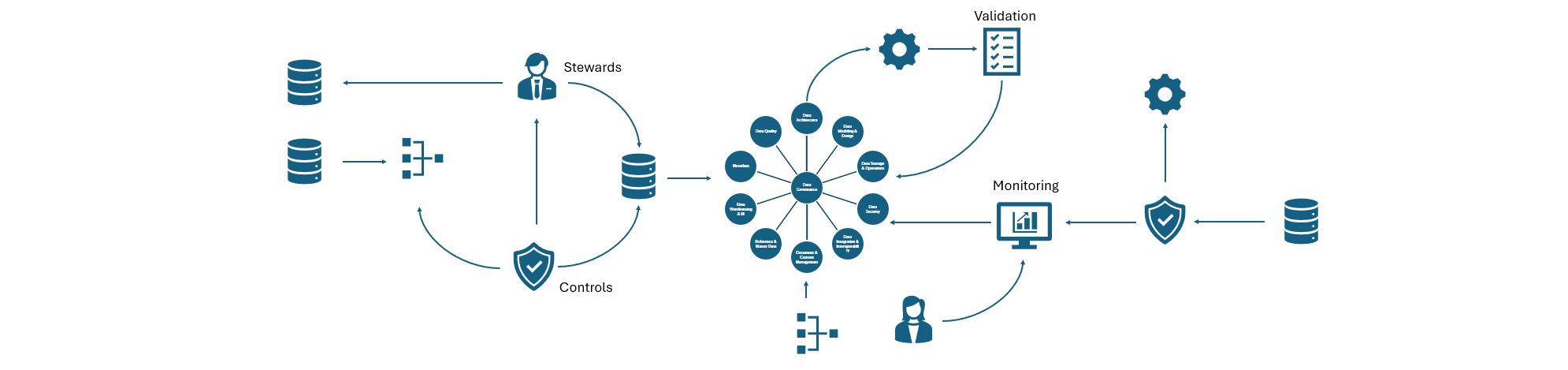
Data Governance
What is Data Governance?
Data Governance is the discipline of ensuring that data is accurate, consistent, secure, and usable across an organization. It establishes the policies, standards, roles, and processes that define how data is managed throughout its lifecycle. Effective data governance creates trust in data, reduces operational risk, and enables better decision‑making.
Data governance is not about bureaucracy—it is about clarity. It ensures that everyone understands what data means, where it comes from, who is responsible for it, and how it should be used. When done well, it strengthens analytics, improves data quality, and supports compliance with legal, regulatory, and industry requirements.
What does Data Governance enable?
Trusted data – consistent, accurate, and reliable information
Clear ownership – defined roles for data stewardship and accountability
Standardization – shared definitions, business rules, and data models
Compliance – alignment with privacy, security, and regulatory obligations
Operational efficiency – reduced rework, duplication, and data confusion
Better decision‑making – confidence that data reflects reality
Data governance supports every data‑driven function, from reporting and analytics to AI, automation, and enterprise architecture.
What are core components of Data Governance?
Data Quality - Ensuring data is accurate, complete, timely, and fit for purpose.
Metadata Management - Documenting the meaning, structure, and context of data so it can be understood and used consistently.
Reference & Master Data Management - Managing shared, high‑value data elements to ensure consistency across systems and processes.
Data Policies & Standards - Defining rules for data access, usage, retention, classification, and protection.
Data Stewardship - Assigning responsibility for data assets, including quality, definitions, and lifecycle management.
Privacy & Security Controls - Protecting sensitive information and ensuring compliance with legal and regulatory requirements.
These components align with the DAMA‑DMBOK framework, the industry‑recognized standard for data management best practices.
What are our Data Governance services?
DAVHILL helps organizations build practical, scalable, and governance‑first data practices. Services include:
Development and implementation of Data and Digital Strategies
Data governance frameworks and operating models
Data quality assessment and improvement programs
Metadata, reference data, and master data management
Data policy, standards, and classification development
Data stewardship roles, processes, and training
Governance for analytics, BI, and AI initiatives
Compliance alignment (privacy, security, regulatory)
Capability development
Our approach emphasizes clarity, accountability, and practical implementation—ensuring that governance strengthens, rather than slows, your data and analytics ecosystem.